
How To Minimise the Environmental Impact of Cloud Operations

What is on this page?
Click to jump to a specific section below.
At TSS, we believe environmental sustainability should be built into every layer of our solutions, including the cloud platforms that process and analyse millions of temperature measurements every year.
Powered by Renewable Energy
Many cloud solutions claim to be carbon neutral, but this is often achieved through carbon offsetting. The TSS SaaS platform, however, is hosted in Swedish cloud environments where data centres increasingly operate on renewable energy and are supported by industry-leading sustainability initiatives. By leveraging modern cloud infrastructure, we also benefit from the efficiencies of large-scale data centres designed to be highly energy efficient, delivering more computing power with a lower environmental impact than traditional server environments.
Considering the embodied carbon (server manufacturing and infrastructure), the actual footprint varies by location and gross grid emission factor. This means that CO₂ emissions per kWh of energy consumption (gCO₂e/kWh) for the TSS SaaS cloud solutions can be as little as 5–10% of those in many other data centres abroad.
Making the Most of Every Digital Resource
Cloud-based software is often viewed as inherently sustainable compared to traditional on-premises systems. While that's true in many cases, not all cloud environments are created equal. The real question is how efficiently those resources are being used.
Rather than allocating dedicated servers for every development, test, and smaller customer environment, we adopted a shared infrastructure approach at TSS. Multiple environments can securely utilise the same database resources, reducing the number of servers required to operate the platform.
It may sound like a small technical decision, but the impact adds up. Fewer machines mean less computing power, lower energy consumption, and a smaller environmental footprint.
Right-Sized Infrastructure Instead of Overprovisioning
In the technology world, it's easy to solve performance concerns by simply adding more computing power. The downside is that oversized systems often consume more energy than they actually need.
That's why we continuously optimise our cloud environment to ensure resources match real-world demand. By using smaller environments where appropriate and scaling only when necessary, we avoid unnecessary energy consumption while maintaining the performance and reliability our customers expect. In other words, we aim to use exactly what is needed, no more and no less.
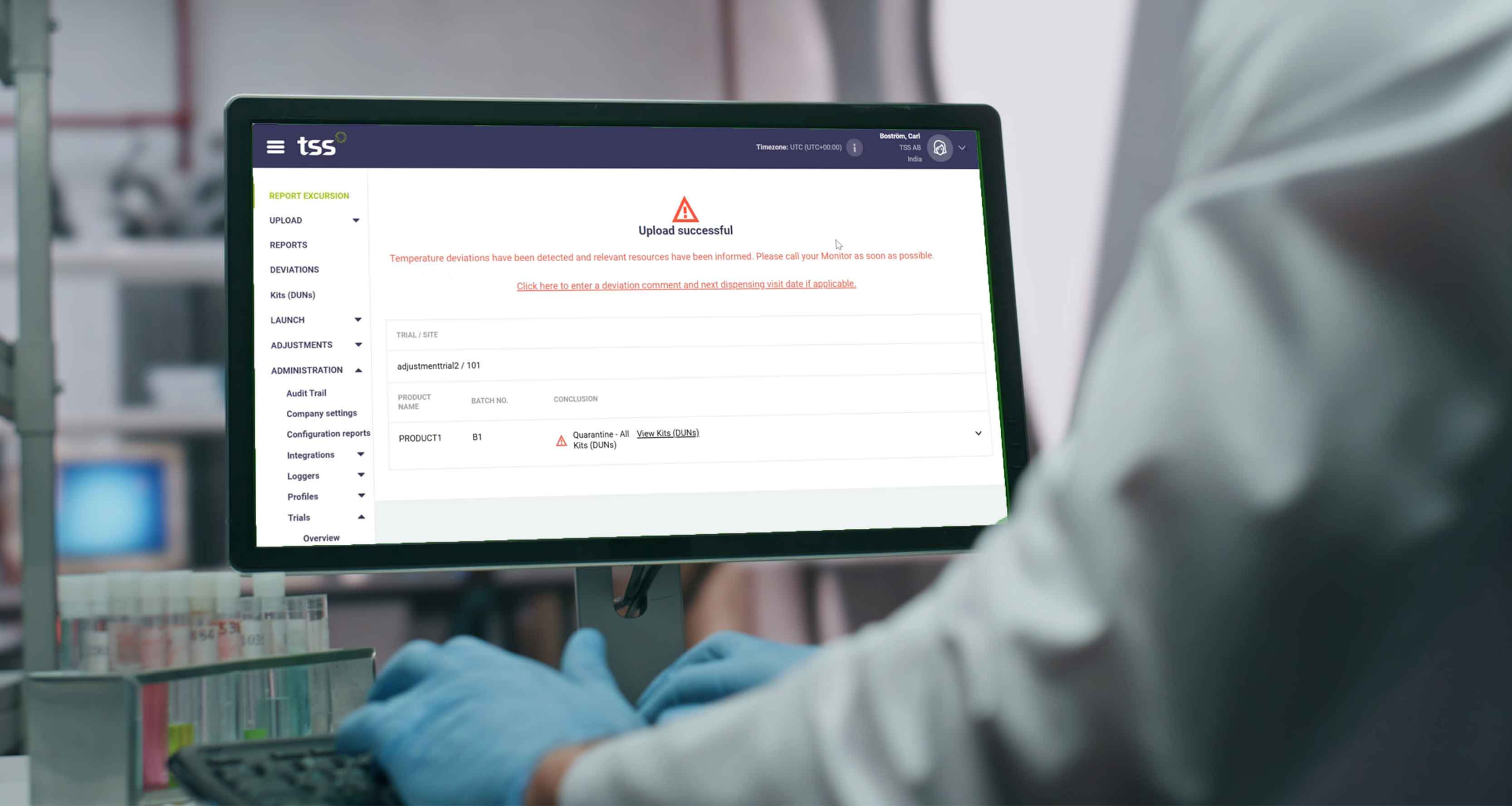
At TSS, we strive to reduce our environmental footprint through responsible technology choices and continuous optimisation of our processes, rather than relying on compensation for existing emissions. Whether it's extending the lifespan of temperature loggers through refurbishment programmes or designing cloud infrastructure that consumes less energy, we are constantly looking for ways to reduce waste and use resources more efficiently.
You may also be interested in
.avif)
Reducing excursion evaluation time from days to seconds

10 Steps to Navigating Sustainability in the Pharma Supply Chain

White paper: the future, today - the next generation of temperature monitoring
You may also be interested in

Join Us at LogiPharma Europe 2026

